Total Security
Enterprise Access Control
Comprehensive physical and logical access control systems. From smart cards and readers to centralized visitor management.
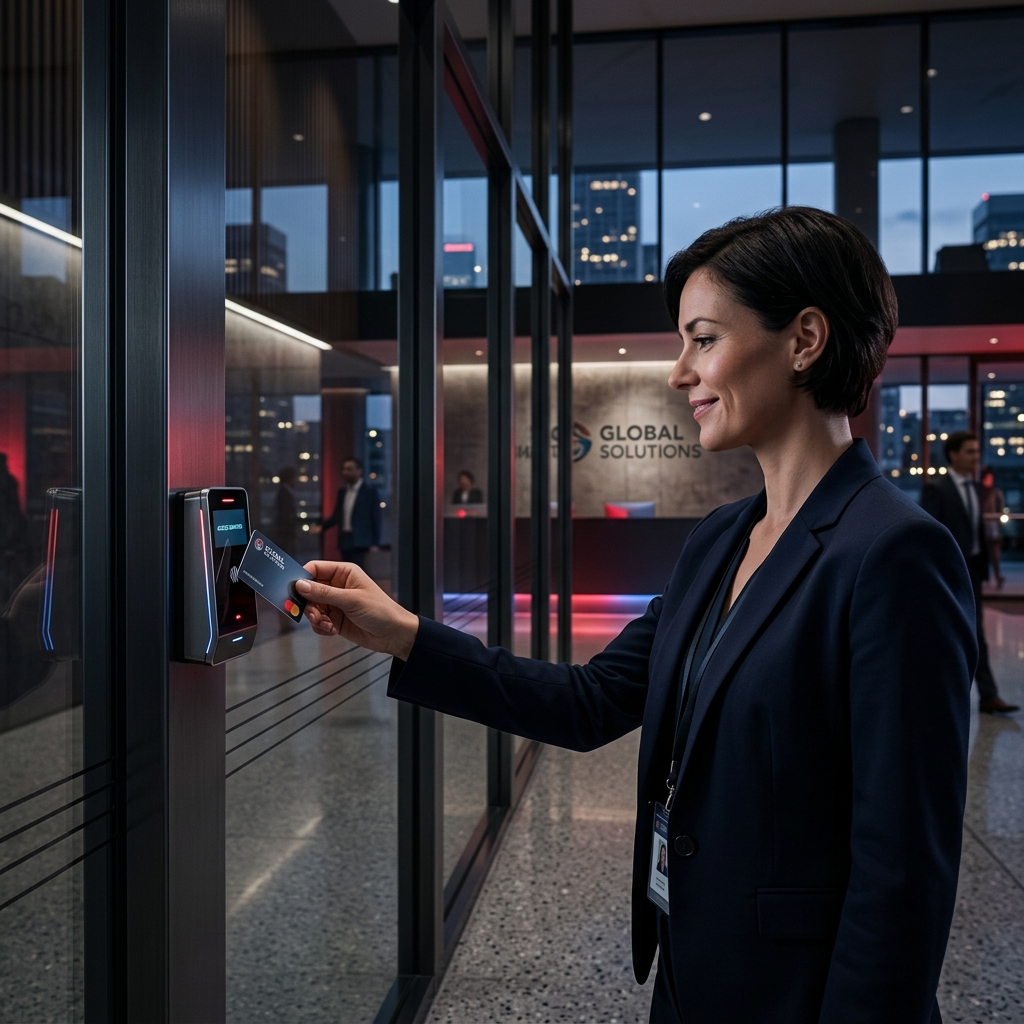
Comprehensive physical and logical access control systems. From smart cards and readers to centralized visitor management.
Secure your facility with complete, scalable access control systems, from robust door readers to centralized management software.
Secure, multi-technology credentials that provide both physical building access and logical IT network access in a single unified card.
High-frequency contactless and contact readers built for reliability, fast throughput, and outdoor durability across any facility.
Streamline guest check-in processes with automated tracking, badge printing, and real-time compliance logging.
Centralized software platforms that manage user identities, define access roles, and generate detailed audit reports.
How our physical access control components work in perfect harmony.
The user presents a Seos smart card or a virtual mobile ID. High-grade cryptographic keys prevent card cloning and skimming.
The reader verifies the credential and sends the encrypted data package to the intelligent controller board via secure OSDP channel.
The controller board matches the credential ID against its local database cache to grant or deny access, unlocking the door magnet.
The event is pushed immediately to the central access software. Security managers can run live tracking and emergency door override commands.
Compare security and cloning parameters before selecting your enterprise cards.
| Feature Metric | MIFARE Classic (13.56MHz) | HID iCLASS Seos (13.56MHz) | Mobile Credentials (NFC / BLE) |
|---|---|---|---|
| Security Level | Low (Vulnerable to cloning) | Maximum (Gold standard) | Maximum (Hardware locked) |
| Encryption Standard | Proprietary Crypto1 (Broken) | AES-128 cryptographic engine | AES-256 standard and secure element |
| Clone / Copy Protection | No (Can be copied via cheap devices) | Yes (Virtual secure storage chip) | Yes (Device-bound authentication) |
| Convenience Level | Physical card required | Physical card required | High (Tap phone / Wearables) |
| Common Applications | Gym access, basic bus transit | Corporate offices, high-security government | Modern hybrid workforces, remote campuses |
We tailor physical security architecture to address specific operating constraints.
Seamless integration with HR payroll, hybrid employee tracking, mobile credentials, and automatic elevator routing systems.
Heavy-duty IP65 outdoor turnstiles, loading bay vehicle barrier gates, and zone-based authority locks for hazardous production units.
Antimicrobial readers, automated zone lockouts for restricted medical cabinets, visitor screening kiosks, and patient ward security.
Unified student ID smart cards for library checking, laboratory access, dining hall cash-free payments, and dormitory security locks.
Everything you need to know about our physical Access Control Solutions.
Every facility is different. Request a free site survey and architecture consultation from our physical security experts.
We don't just sell hardware; we ensure it works flawlessly round the clock.
Contact Tech SupportInstant troubleshooting via secure remote desktop protocols.
PAN India physical dispatch for hardware-level issues.
Firmware upgrades and hardware recalibration.
Driver installation, OS compatibility fixes, and API support.